

Sodium-ion vs lead-acid: what actually changes day to day
Spec sheets compare chemistries. Sites live with the result. Here is what changes when a bank of lead-acid batteries is replaced by a sodium-ion system.
The maintenance round disappears
Flooded lead-acid needs water topped up, terminals cleaned and specific gravity checked. A sealed sodium-ion system asks for a yearly look at connections, ventilation and the reported battery health.
The room matters less
Lead-acid loses capacity in the cold and ages fast in the heat. Sodium-ion cells are designed for a wider range, so a warm plant room or an unconditioned back room is less of a problem. Always check the exact datasheet for the working range.
The weight drops
For the same usable energy, sodium-ion is much lighter than lead-acid, though heavier than lithium. That can mean a wall mount instead of a rack and a trolley.
More of the battery is usable
Lead-acid is usually kept above about half charge to protect its life. Sodium-ion systems typically let you use most of the rated capacity, so a smaller rated battery can give the same hours.
What does not change
- The inverter still has to be sized for the peak load.
- Wiring, earthing and a tested changeover still matter.
- You still pay more upfront than for lead-acid.
When to keep lead-acid
If power cuts are rare and short, and the load is small, lead-acid can be the sensible choice. The case for sodium-ion is strongest where the battery cycles often and nobody wants to maintain it. More in our comparison.
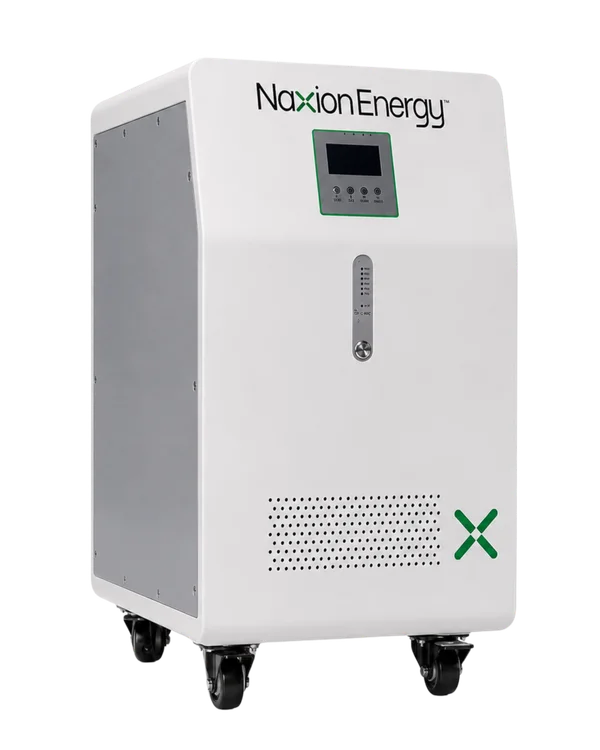
Product image: Naxion Energy.
Get your quote today
Tell us what you run and where. We reply with the right Naxion system and a written quote.